
GUEST POST: Simplifying Zone Offense by Tristan Winkelman
Ideas on making your zone offense make sense

This is a guest post from Tristan Winkelman.
He is a basketball coach, athletic director, and creator of the Fix-It Offense framework.
As a Texas high school head coach and youth trainer, he helps players and coaches develop game intelligence, shot discipline, and advantage-based offense.
Tristan also creates digital coaching resources and clinics designed to help programs build sustainable offensive systems.
You can find him on twitter @tristan_wink and on TikTok @coachthoops.
If you’re new to Hoops Companion, subscribe below to get weekly breakdowns like this delivered to your inbox.
Zone offense isn’t about memorizing plays. It’s about having a spacing framework that creates clarity under pressure.
When teams struggle against zone, it’s usually because they don’t have clear rules for:
where to space
what gaps to attack
how to create a paint touch consistently
At the end of the day, zone is a geometry problem. And geometry problems are solved with spacing. The reality is we work zone offense less than almost anything else.
We drill man concepts. We script ATOs. We rep ball screen reads.
Zone usually gets a short segment of our practice time.
Because of that, we don’t need six different zone sets.
We need a simple framework that gives us the biggest return on our time investment:
Step 1: Overload a side
Before actions, reversals, sets or any of that, we need to provide a simple spacing template.
Overload one side of the zone. Zones are built to defend symmetry. So break symmetry.
Your goal every possession: force one defender to make two decisions.
If one defender can comfortably guard two offensive players, your spacing is wrong.
That’s the core rule of zone offense: No defender guards two easily.
We naturally want to force one defender to guard two offensive players in a zone offense. But, we want our spacing to be so elite that it causes problems and forces defensive decisions.
And when the defense makes decisions, we just have to prove where they are wrong.
Here are two alignments you can install immediately:
Install #1: Double Away (Opposite-Side Overload)
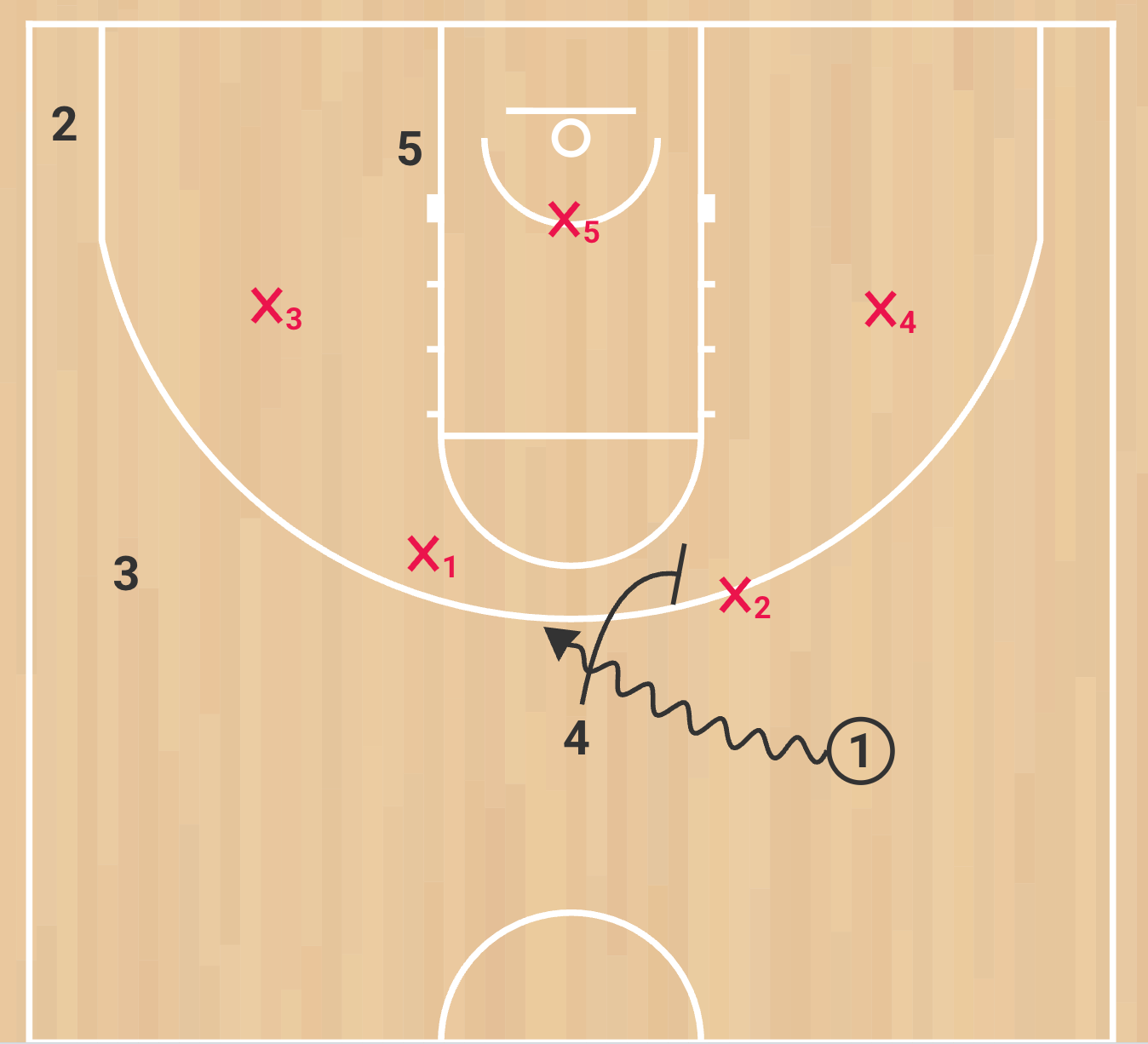
Alignment
Weak side wing lifted
Weak side corner occupied
Weak side dunker filled
Screener at the nail
Everything starts with a ball screen. Where it happens depends on the zone:
Odd front (1–3–1, 3–2) → Ball screen on the lane line extended
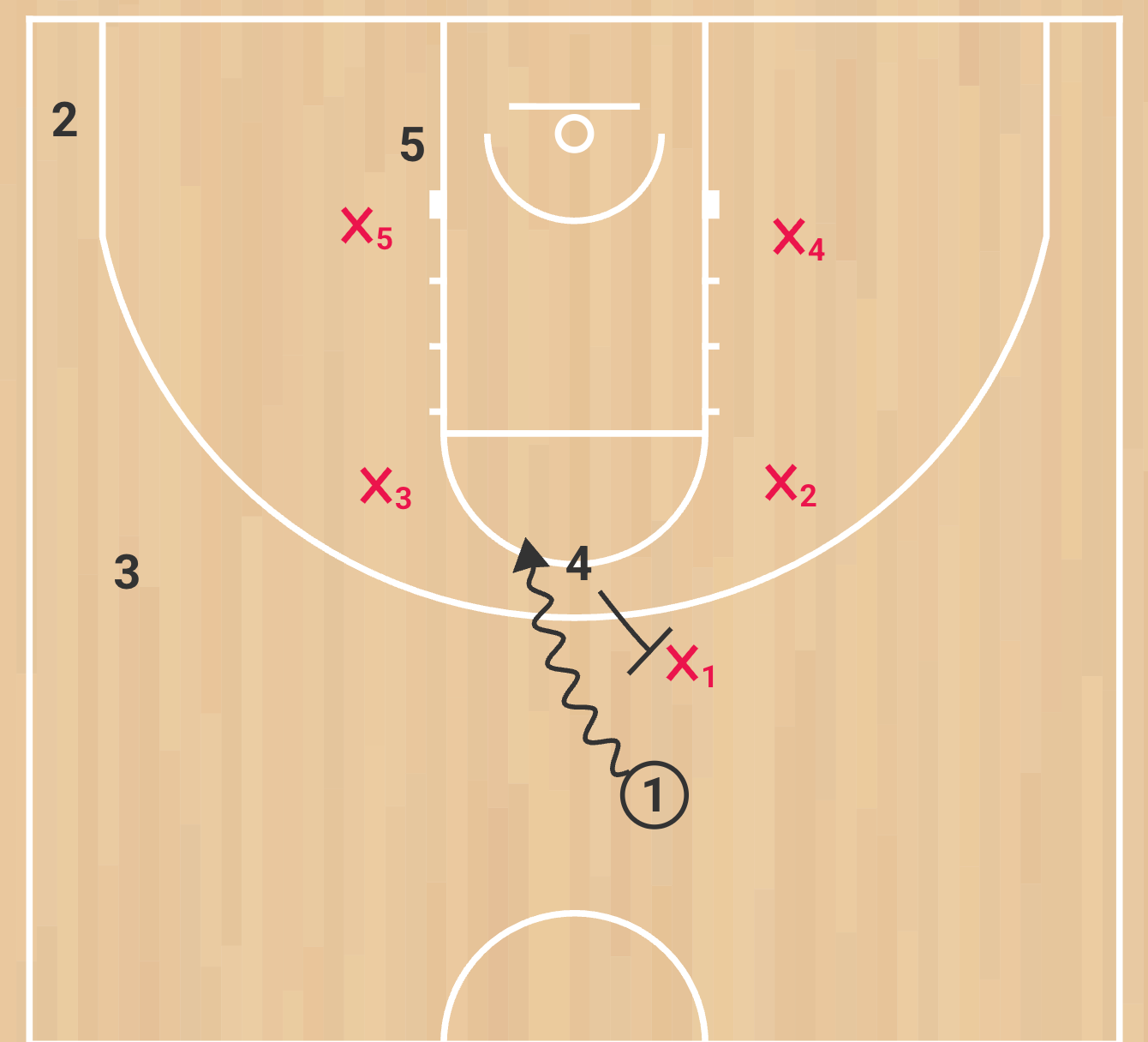
Even front (2–3, 2–1–2) → Ball screen on a wing.
First and foremost, your ball handler needs to look to get a paint touch.
Good things happen vs. a zone when the ball touches the paint.
We’re trying to make x1 here make a decision: Do I stunt on the ball or stay home on the wing?
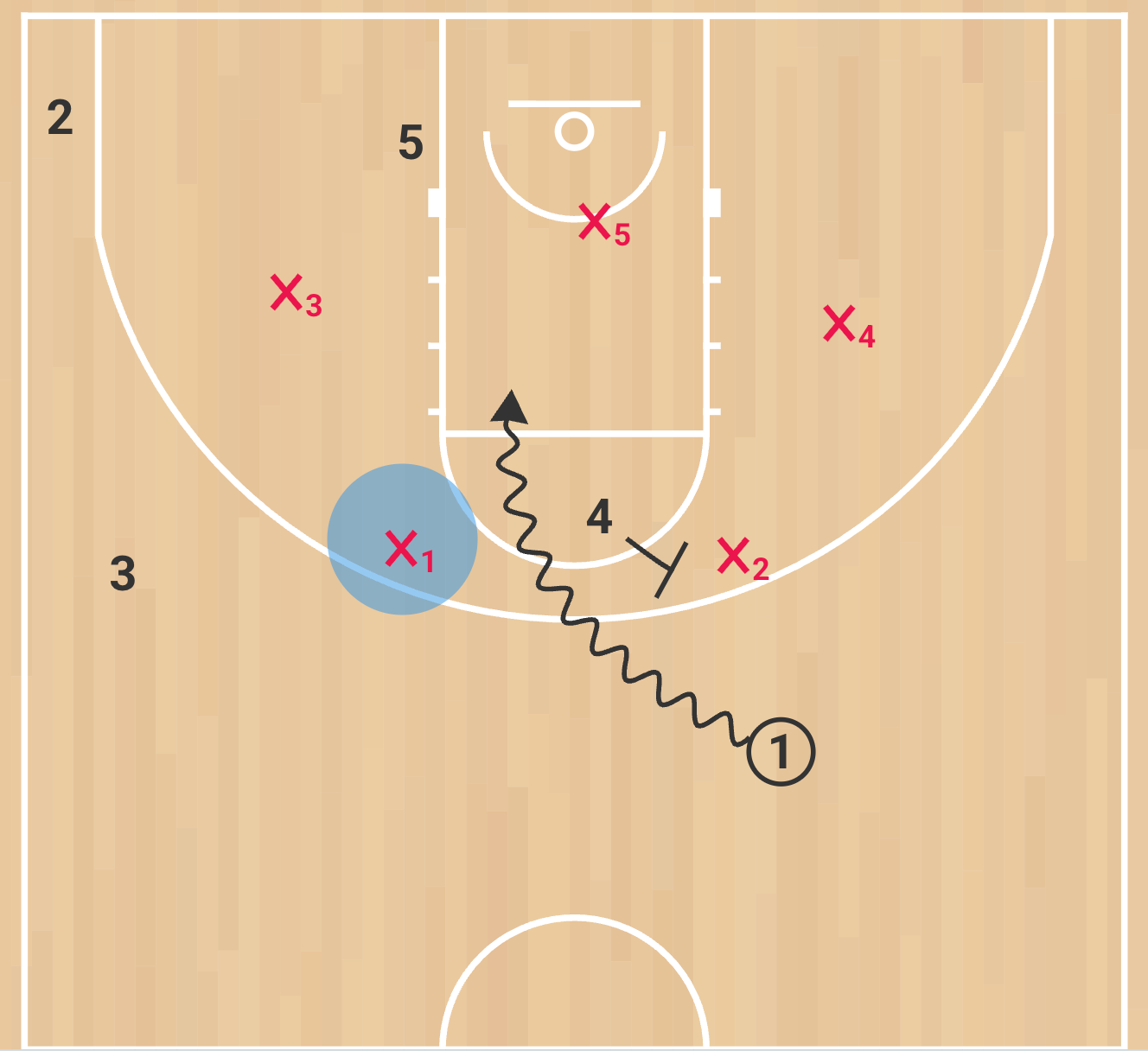
When the defense naturally tries to take that away, we play to the double away side.
We’re trying to make x3 make a decision here: How do I cover 2 that have elite spacing?
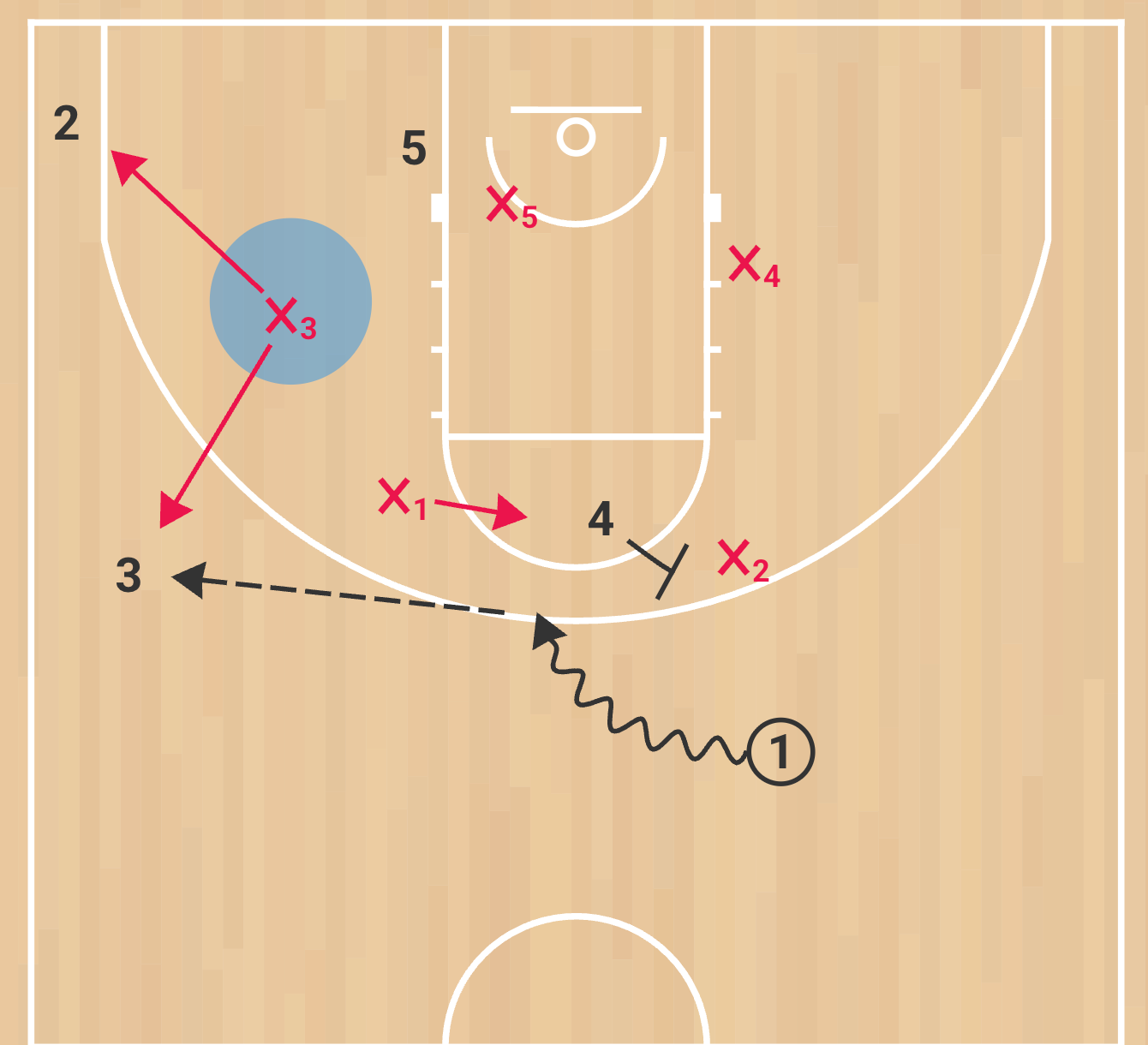
Against odd fronts, you flatten the single top defender. Against even fronts, you shift one of the two top defenders laterally. This forces defensive decisions.
After the screen:
Screener short rolls to the high post.
5 ducks in the x5.
1 spaces opposite for a potential skip pass.
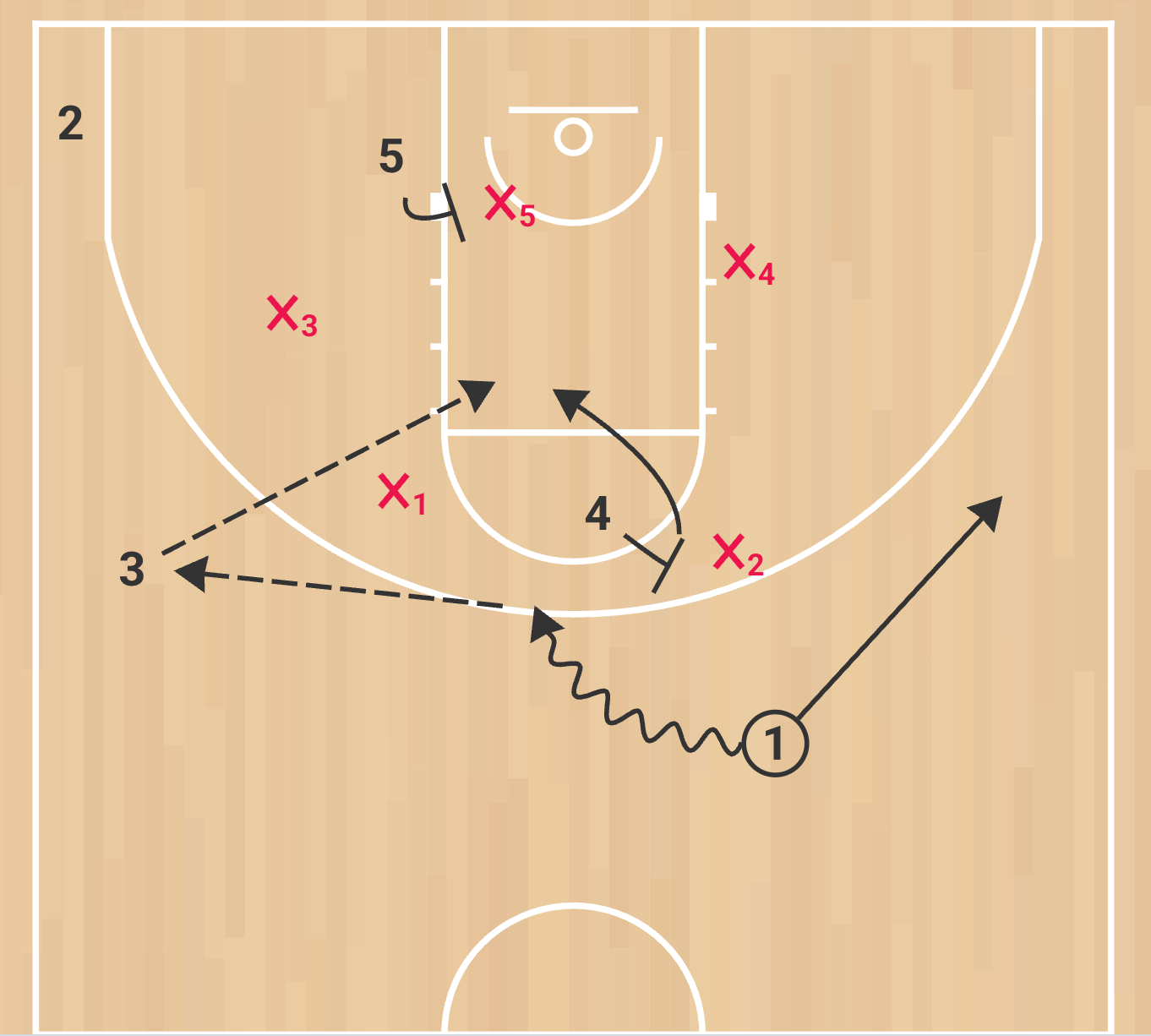
You can play your typical high low game, you can attack gaps from this, you can get corner 3s.
It truly depends on what your team’s strengths are and what you want to emphasize.
Install #2: Double Same (Same-Side Overload)
Same ball screen entry rule:
Odd front → screen in the middle.
Even front → screen on a wing.
Here’s the difference.
Instead of rolling to the nail, the screener pops to the ball side and we overload the same side the ball is being brought up the floor.
This can be done with a pick and pop (or my personal favorite just ghost the screen right away).
Alignment
Strong side corner filled
Weakside wing cuts high post on a pop pass
Strong side dunker filled
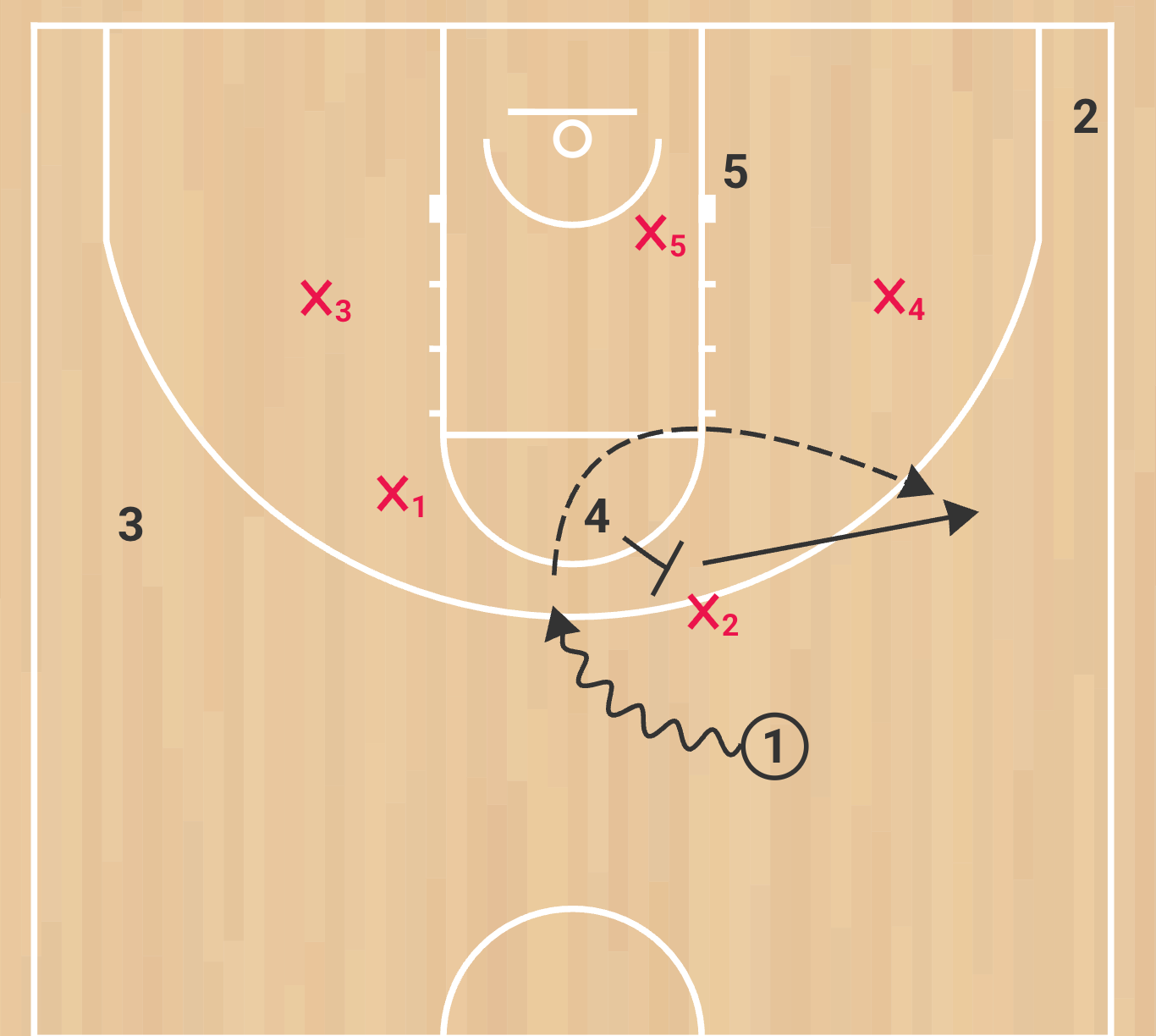
You can get this shape from a double away by simple cutting the weakside corner to the same side corner and then having the 3 flash high post on a catch from the 4:
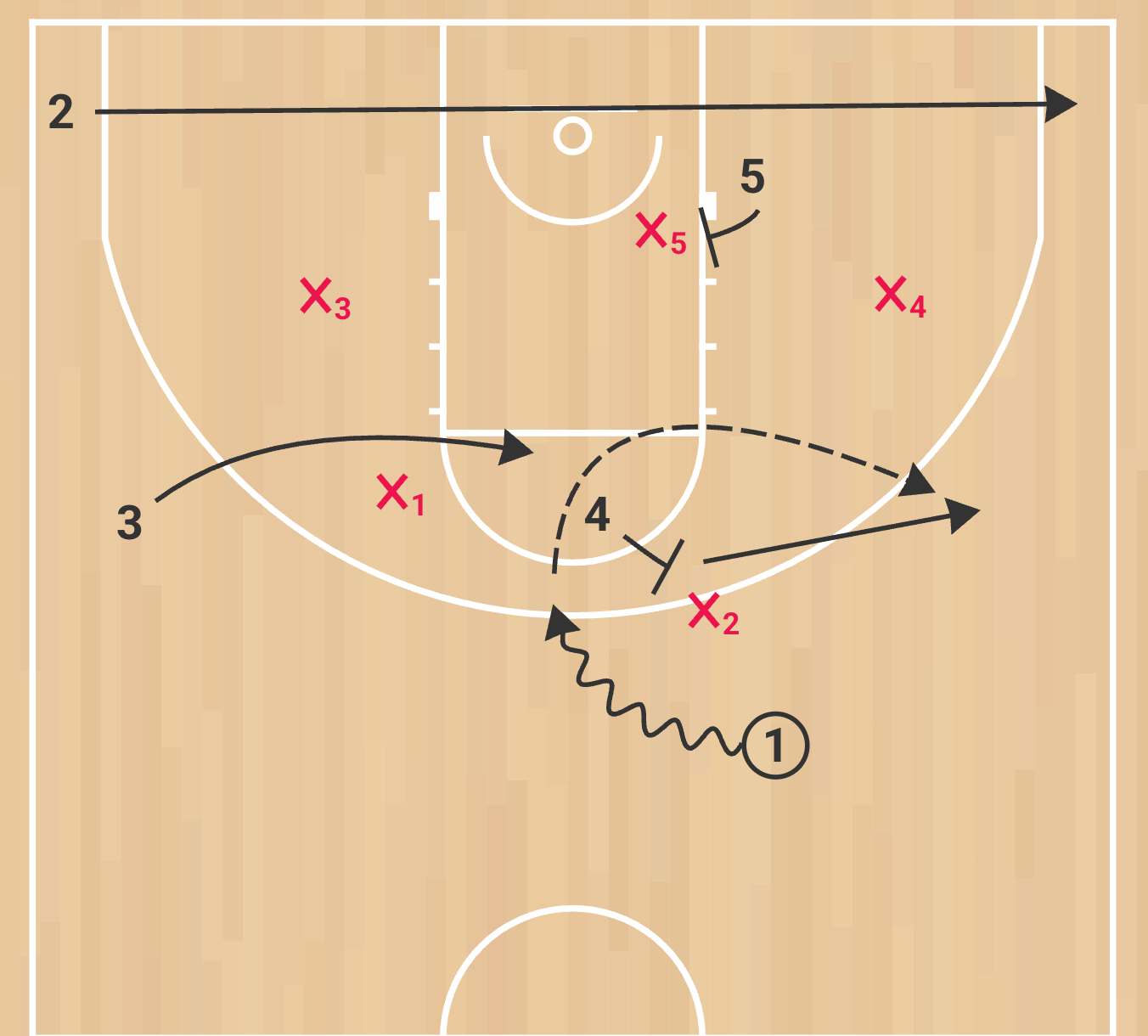
Same concepts and reads apply here. You’re reading what the x4 does and can attack, throw high post, shot or one more.
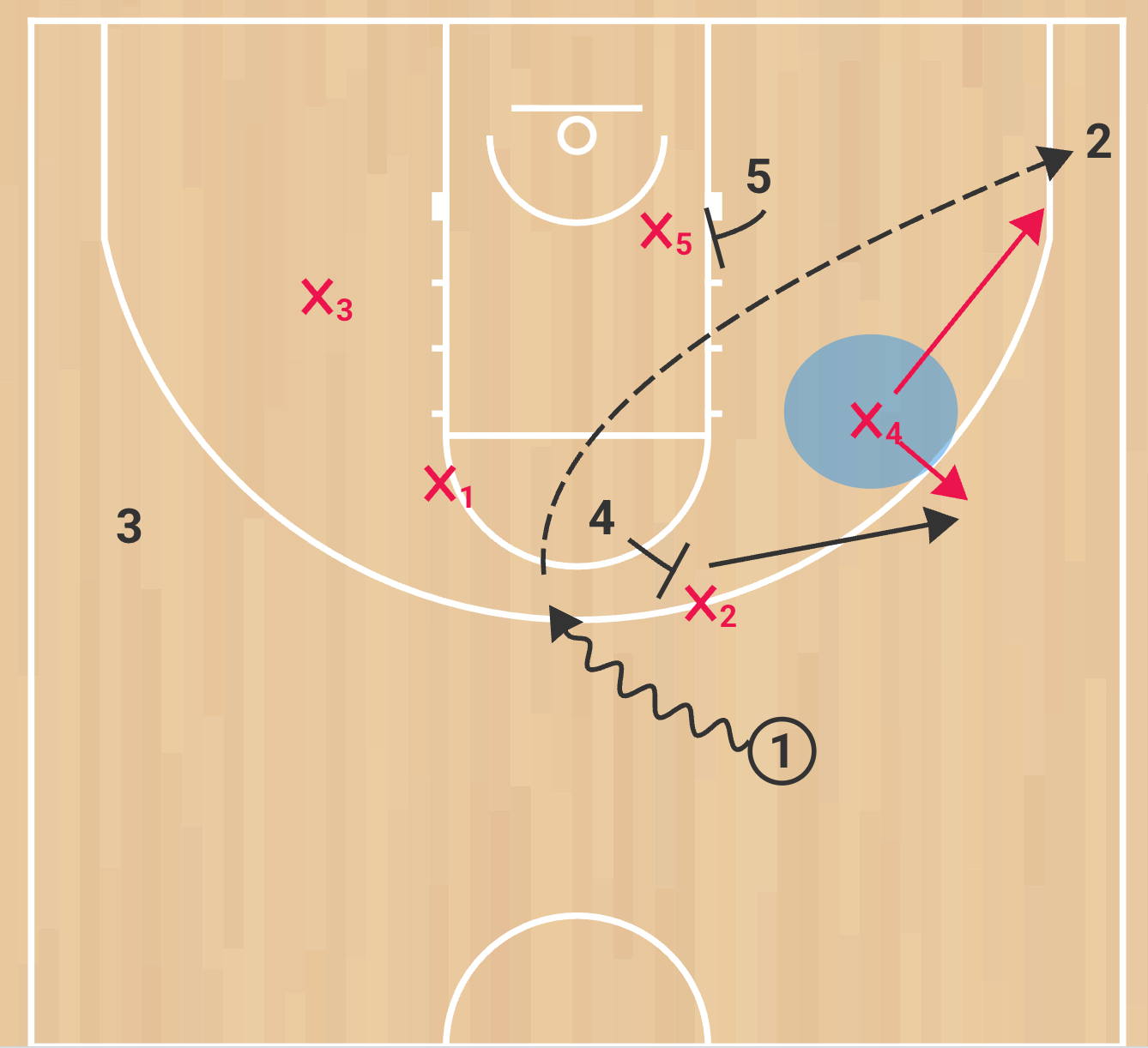
One little nuance if you’re facing an odd-front zone: Double Same is best used against an even front zone.
I’ve found that the Double Same alignment should be used sparingly against an odd front zone unless you feel like you have a PG that can make this pass to the corner.
If you can, this is DEADLY if the 5 is ducking in on the x5.
You’re putting the x4 in a TOUGH position if he’s sitting on that pop:
In my opinion, you can run Double Away the entire game and get good looks on most possessions.
If you want to run just that and have a couple ways to get into that look, I think you can be very successful doing that.
I just love the Double Same look as it’s the “Play Action Pass” version of lulling the defense to sleep with a Double Away consistently then hitting them with a same side overload. Just a thought.
Step 2: Install Non-Negotiables
Back to our steps. Alignments without rules turn into standing.
Because we don’t rep zone offense as much, our principles must be VERY clear.
Layer these on top of both installs or on top of anything that you already do:
1. Paint Touch Before Shot
Unless it’s rhythm inside-out, the ball must touch the paint or the high post.
2. Shot - Pass - Drive on the Catch
Every catch is decisive. Players have to be assertive on zone offense, if you lazily swing the ball around, zone defense can rotate with ease.
3. Play Behind the Zone
Dunker. Short corner. Corner. All good places to play from regardless of alignment
4. Re-Space Immediately
If the first action doesn’t create advantage, keep the ball moving and respace with purpose. Zone cracks on movement. Gaps reveal themselves.
5. Make a Defender Guard Air
This is why I love overload principles. The more we can get a defender guarding air, the more successful we can be.
Step 3: Practice It With Constraints
I’m sure we’ve all seen stuff about CLA. Yes, you can do CLA against a zone too.
Zone offense won’t improve in shell alone.
If we barely rep it, those reps must matter!
Try this when running your stuff:
No shot until paint touch.
Must get a touch behind the zone before scoring.
Any possession where one defender clearly guards two with ease = turnover or minus points.
12-second clock.
Only inside-out threes count.
Constraint-based reps build understanding.
Standing and talking through zone offense does not.
You can absolutely add a couple quick hitters. Be my guest. Have a baseline runner set. Have a flare skip action.
But if your zone offense depends on memorizing multiple set plays, it’s fragile.
I’m going to be quite honest. Because once the first option is taken away, players freeze. Have spacing templates to play out of.
That’s the reason why I love Double Away and Double Same. They give you:
A consistent entry (ball screen).
Clear overload rules.
Automatic paint pressure.
Built-in second-side flow with skip passes
Transferable spacing principles.
It works against 2–3, 2–1–2, 3–2, 1–3–1, Matchup. And it doesn’t require heavy install time. It gives you the biggest return on your time investment.
Because you’re teaching spacing, advantage, and decision-making. Not plays.
The bottom line is we don’t rep zone enough to justify complexity. So keep it simple.
Ball screen entry. Overload a side. Force a decision.
Spacing creates calm in zone offense. And if one defender can guard two of your players with ease…your spacing is broken.
Fix that first and everything else gets easier.
If this was helpful, here’s how to go deeper with Hoops Companion:
Start with the free newsletter - subscribe for a weekly post (and more) in your inbox
Get the HC Master Playbook - 650+ pages of drills, plays, and concepts…updated and in your inbox monthly
Grab the Coaching Bundle - our most popular products (Master Playbook, Coaching Portfolio Course, Forms and Templates, Guide to Coaching Youth Basketball) at a 28% discount when bundled
Join HC3 on Skool - if you REALLY want to dive in…this is for you. Monthly clinics on building your team/program/scheme, access to all Hoops Companion resources, structured and focused development, a community of like-minded coaches, and more